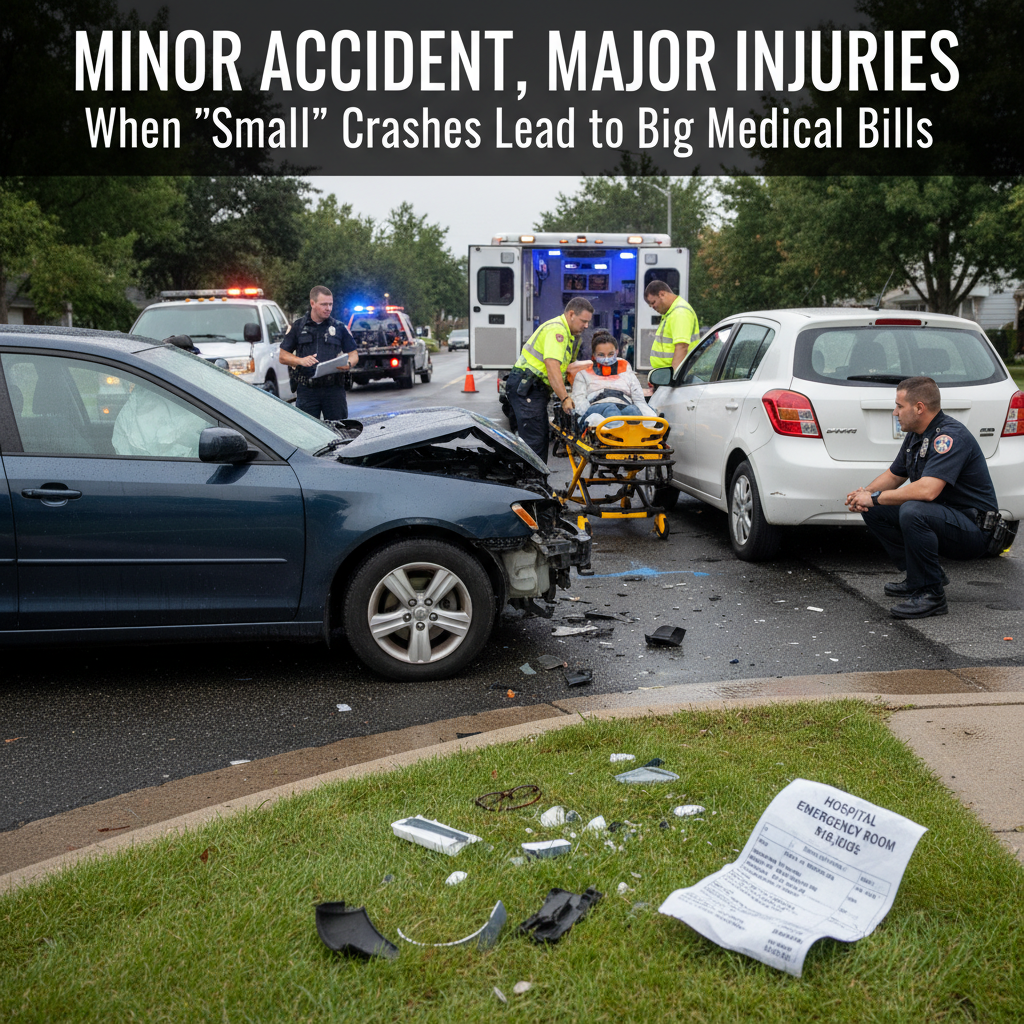
Real Car Accident Settlement Examples: What People Actually Got Paid
These are actual settlement amounts from real cases. Understanding what others recovered for similar injuries helps you evaluate whether an insurance offer is fair—or a lowball.
When an insurance adjuster offers you $15,000 to settle your car accident claim, how do you know if that's fair? Without a frame of reference for what similar cases actually settle for, you're negotiating blind. That's exactly what insurance companies count on.
This article provides real settlement examples across different injury types, accident scenarios, and claim complexities. These are actual case results that demonstrate what accident victims with similar injuries recovered—giving you a realistic baseline for evaluating your own claim.
Understanding Settlement Ranges
Settlement amounts vary widely based on injury severity, medical treatment, lost wages, liability clarity, insurance coverage limits, jurisdiction, and whether the victim had legal representation. The examples below represent realistic settlement ranges—not guarantees—and demonstrate how different factors drive case values up or down.
Minor Injury Settlements ($3,000 - $25,000)
Soft Tissue Whiplash, Full Recovery
$8,500Rear-ended at red light, low-speed impact (~15 mph)
Neck strain, headaches. Emergency room visit same day. 6 weeks of physical therapy (2× per week). Full recovery with no permanent impairment. Total treatment duration: 6 weeks.
Medical bills: $3,200. Lost wages: 3 days missed work = $480. Total economic: $3,680.
Why This Amount?
- Clear liability (rear-end collision)
- Prompt medical treatment establishing causation
- Consistent treatment with no gaps
- Full recovery = lower multiplier on pain/suffering
- Self-represented initially, then consulted legal counsel before accepting
Minor Concussion, Resolved Symptoms
$18,000T-bone collision at intersection, other driver ran stop sign
Mild traumatic brain injury (mTBI), headaches, dizziness, light sensitivity. ER visit with CT scan (negative). Neurologist follow-up. Cognitive rest for 3 weeks. Symptoms resolved fully by week 8. No permanent deficits.
Medical: $5,800. Lost wages: 3 weeks = $2,400. Total economic: $8,200.
Why This Amount?
- TBI (even mild) commands higher multipliers due to severity perception
- Clear liability (police report cited other driver for stop sign violation)
- Immediate medical care with diagnostic imaging
- Represented by legal counsel from week 2
Moderate Injury Settlements ($25,000 - $100,000)
Herniated Disc, Conservative Treatment
$62,000Rear-ended on highway, significant impact with vehicle damage over $8,000
L4-L5 herniated disc confirmed by MRI. 4 months of physical therapy. Epidural steroid injections (3 rounds). Ongoing pain management. Permanent partial impairment rating of 8%. Will likely require surgery in future (not yet performed at settlement).
Medical: $18,500 past, $15,000 estimated future surgery. Lost wages: 8 weeks = $9,200. Total economic: $42,700.
Why This Amount?
- Objective injury (herniation visible on MRI)
- Permanent impairment rating by treating physician
- Future medical costs supported by surgical recommendation
- Clear liability in rear-end collision
- Legal representation throughout
Fractured Wrist, Surgery Required
$47,500Side-impact collision, 40% comparative fault assigned (claimant failed to yield)
Distal radius fracture requiring ORIF surgery with plates and screws. 6 months physical therapy for range of motion. Permanent hardware in wrist. Some permanent loss of grip strength and mobility.
Medical (surgery, PT, hardware): $28,000. Lost wages (construction worker, 12 weeks): $14,400. Total: $42,400. Settlement reduced by 40% comparative fault.
Why This Amount?
- Surgery = serious injury commanding higher multiplier
- Permanent hardware and functional loss increase value
- Comparative fault reduced recovery by 40%
- Documented impact on manual labor career
Serious Injury Settlements ($100,000 - $500,000)
Multiple Herniated Discs, Spinal Fusion Surgery
$285,000High-speed rear-end on freeway by distracted driver (texting)
C5-C6 and C6-C7 herniated discs. 6 months conservative treatment failed. Anterior cervical discectomy and fusion (ACDF) surgery. 1 year recovery. Permanent restrictions: no lifting over 25 lbs, limited overhead work. 15% permanent partial disability rating.
Medical (surgery, PT, pain management): $127,000. Lost wages (6 months): $42,000. Lost earning capacity (reduced to desk job): $85,000 lifetime present value. Total economic: $254,000.
Why This Amount?
- Spinal surgery = severe, permanent injury
- Clear liability (distracted driving, police citation)
- Vocational expert testimony on reduced earning capacity
- Economic expert calculated lifetime earnings loss
- Permanent work restrictions documented by surgeon
- Settlement avoided trial but reflected strong case value
Traumatic Brain Injury, Permanent Cognitive Deficits
$425,000Head-on collision caused by drunk driver (BAC 0.18)
Moderate TBI with 3-day ICU stay. Subdural hematoma requiring monitoring. 18 months cognitive rehabilitation. Permanent deficits in memory, processing speed, and executive function. Unable to return to work as financial analyst. Now works part-time in reduced-complexity role.
Medical: $185,000 past, $50,000 future care. Lost wages (18 months): $135,000. Lifetime earning capacity reduction: $680,000 (present value). Total economic: $1,050,000 (capped by policy limits at $500,000).
Why This Amount?
- Catastrophic, life-altering injury
- Drunk driver = clear liability + potential punitive damages
- At-fault driver's policy maxed at $500K
- Victim's underinsured motorist coverage provided additional $250K
- Economic & neuropsychological expert testimony
- Actual case value exceeded $1M but limited by available coverage
💡 Policy Limits Matter
Even when your damages exceed $1 million, your recovery is often capped by the at-fault driver's insurance policy limits. This is why underinsured motorist (UIM) coverage on your own policy is critical—it fills the gap when the other driver doesn't have enough coverage. Many devastating injury cases settle for far less than their true value simply because there's no insurance money available to pay more.
Settlement Ranges by Injury Type
These ranges represent typical settlements based on thousands of resolved cases. Your specific case may fall outside these ranges depending on unique factors.
| Injury Type | Typical Medical Bills | Settlement Range | Key Variables |
|---|---|---|---|
| Soft tissue (resolved) | $2,000 - $8,000 | $5,000 - $25,000 | Treatment duration, gap consistency, full recovery |
| Whiplash (chronic) | $8,000 - $25,000 | $20,000 - $80,000 | Permanence, ongoing pain management, work impact |
| Simple fracture (healed) | $10,000 - $30,000 | $25,000 - $80,000 | Bone involved, surgery needed, permanent hardware |
| Complex fracture | $30,000 - $80,000 | $75,000 - $200,000 | Multiple surgeries, joint involvement, disability |
| Herniated disc (conservative) | $15,000 - $40,000 | $40,000 - $150,000 | Impairment rating, future surgery risk, work restrictions |
| Herniated disc (surgery) | $80,000 - $150,000 | $150,000 - $500,000 | Fusion vs. discectomy, multiple levels, permanence |
| Mild TBI (resolved) | $8,000 - $30,000 | $30,000 - $120,000 | Symptom duration, cognitive testing, career impact |
| Moderate/Severe TBI | $150,000 - $500,000+ | $400,000 - $3,000,000+ | Permanent deficits, life care needs, earning capacity loss |
| Partial paralysis | $200,000 - $1,000,000+ | $1,000,000 - $10,000,000+ | Extent of paralysis, age, life care costs |
| Wrongful death | N/A | $500,000 - $10,000,000+ | Age of deceased, dependents, earning capacity, liability |
What Drives Settlement Values Up or Down
Factors that increase settlement value:
- Clear, undisputed liability with police report citing at-fault driver
- Objective evidence of injury (MRI findings, fractures on X-ray, surgical reports)
- Immediate medical care with no treatment gaps
- Permanent impairment or disability ratings from treating physicians
- Surgery performed (demonstrates severity)
- Significant impact on career or earning capacity documented by experts
- Egregious conduct by defendant (DUI, texting, recklessness)
- Legal representation from the beginning
- Strong documentation: pain journals, consistent medical complaints, photo evidence
Factors that decrease settlement value:
- Comparative fault assigned to the victim
- Treatment gaps or delayed medical care
- Pre-existing conditions affecting the same body part
- Soft tissue injuries with no objective findings
- Inconsistent symptom complaints in medical records
- Social media evidence contradicting claimed limitations
- Limited insurance coverage capping maximum recovery
- Conservative jurisdiction with historically low jury awards
"Settlement examples give you a reality check on what's actually possible. But every case is unique. Two herniated disc cases can settle $100,000 apart based solely on how well documented the pain and functional loss are, how clear the liability is, and whether the victim has competent representation. Use these examples as a starting point—not a guarantee."
The Bottom Line: Your Case Is Unique
These settlement examples demonstrate realistic recovery ranges for different injury types and case complexities. But your specific case value depends on dozens of variables: your jurisdiction's jury trends, the strength of your medical documentation, the quality of your legal representation, the insurance coverage available, and how well you can prove every element of your damages.
Use these examples to calibrate your expectations—but don't assume your case will fall exactly in these ranges. The only way to know what your case is actually worth is to have someone with experience in your jurisdiction evaluate your specific facts, injuries, and documentation.