Rear-Ended at a Red Light: Is Liability Always Clear-Cut?
You were stopped at a red light. Someone hit you from behind. Seems obvious who's at fault—but insurance companies contest rear-end claims far more often than victims expect. Here's what you need to know.
You're sitting at a red light, completely stopped, when you feel the jolt. Your car lurches forward, your head snaps back. The driver behind you hit you. In your mind—and in the minds of most reasonable people—this seems like the most cut-and-dried liability situation imaginable. They hit you from behind. You were stopped. Case closed.
Except insurance companies don't see it that way. Every year, tens of thousands of rear-end accident victims are shocked to discover their "obvious" liability case has been disputed, partially denied, or significantly undervalued because the insurance adjuster found ways to argue shared fault, question their injuries, or exploit procedural mistakes.
Understanding how liability actually works in rear-end collisions—including when it isn't clear-cut and how insurance companies fight these claims—is critical to protecting your rights and getting the compensation you deserve.
The Short Answer
In most rear-end collisions where you were fully stopped, the rear driver is presumed at fault under the law. This presumption is strong but not absolute. Insurance companies will attempt to rebut it using arguments about sudden stops, brake lights, pre-existing vehicle issues, or your own driving behavior. The presumption protects you legally—but only if you document and handle your case correctly.
Why the Rear Driver Is Presumed at Fault
Every driver has a legal duty to maintain a safe following distance and to be able to stop their vehicle in time to avoid a collision with a vehicle ahead. This duty comes from:
- Traffic laws: Every state has laws requiring drivers to maintain safe following distances and control their vehicles
- The "assured clear distance" doctrine: Drivers must be able to stop within the distance they can clearly see ahead
- Right of way rules: A stopped vehicle has the right to be where it is; a moving vehicle has the duty to avoid it
When the rear driver fails to stop in time and hits you, the legal presumption is that they violated their duty of care. In most states, this creates a rebuttable presumption of negligence—meaning the rear driver is assumed at fault unless they can prove otherwise.
In practice, this means that in a standard rear-end at a red light, you don't have to prove the other driver was negligent—they have to prove they weren't. That's a significant legal advantage that many victims don't fully appreciate or protect.
When Liability IS Clear-Cut
The following scenarios represent the strongest possible rear-end liability cases—situations where contesting fault would be extremely difficult for an insurance company:
🟢 Strong Liability Scenarios
- You were fully stopped at a red light when struck — no question you had the right to be there
- Your brake lights were functioning — verifiable by inspection or dash cam
- Police cited the rear driver for distracted driving, following too closely, or failure to stop
- Multiple witnesses confirm you were stopped and the rear driver simply wasn't paying attention
- Dashcam footage from your vehicle or nearby traffic cameras shows the collision clearly
- The rear driver admitted fault at the scene ("I'm sorry, I wasn't looking")
- Cell phone records show the rear driver was texting at the time of impact
- The rear driver showed signs of intoxication and was cited for DUI
✓ Result: Clear Liability
With these factors in place, establishing that the rear driver is 100% responsible is typically straightforward. Focus shifts to proving damages and negotiating fair compensation.
⚠️ Still Watch Out For
Even with clear liability, insurance companies will contest injury severity, argue pre-existing conditions, and use recorded statements to minimize payouts. Liability and damages are separate battles.
When Insurance Companies Contest Rear-End Liability
Here's where many accident victims get blindsided. Even in rear-end collisions that seem obviously the rear driver's fault, insurance companies have a playbook of arguments they use to dispute or reduce liability. Understanding these arguments—and how to counter them—is essential.
Defense #1: The Sudden Stop Argument
What they claim: "Our insured was following at a safe distance, but you made a sudden, unexpected stop that gave them no time to react. You share fault for creating a dangerous situation."
How they use it: They'll argue you cut off the rear driver, stopped abruptly to avoid hitting someone else, or that your stop wasn't justified by traffic conditions. They claim a "reasonable driver" behind you couldn't have anticipated or reacted to your stop.
The legal reality: Courts generally reject this argument when you were stopped at a red light—stopping for a red light is always foreseeable. However, in highway settings where you may have braked suddenly, the argument can have more traction.
Defense #2: Brake Light Failure
What they claim: "Our insured couldn't stop in time because your brake lights weren't working. If drivers behind couldn't see you stopping, you share responsibility for the collision."
How they use it: This argument is most effective when there's no dashcam evidence, the rear driver claims they didn't see brake lights, and the accident happened at night. Inspecting your vehicle after the fact often can't definitively prove brake lights were functioning at the moment of impact.
The legal reality: Even if brake lights were out, you still had the right to be stopped at a red light. At most, this might reduce the rear driver's fault in some states. But being stopped for a traffic signal remains clearly lawful regardless.
Defense #3: You Were Not Fully Stopped ("Rolling Stop")
What they claim: "Our insured had begun stopping, but your vehicle rolled back slightly into their path, or you were still moving when struck. This changes the liability analysis."
How they use it: On hills or slight grades, vehicles can creep backward slightly. If there's any ambiguity about whether you were truly stationary at impact, they'll exploit it. They may also argue you pulled out and then stopped, creating a hazard.
The legal reality: Accident reconstruction can typically determine whether a vehicle was stationary at impact based on physical evidence. This defense is often weak but can complicate straightforward cases.
Defense #4: Your Contributory Actions
What they claim: "The victim made lane changes immediately before the collision, cut off our insured, or made a sudden maneuver that contributed to the accident."
How they use it: If the accident happened during a merge, lane change, or as you pulled into a turn lane, they'll argue your actions reduced their reaction time and contributed to the collision.
The legal reality: Even if you changed lanes before the collision, if you were fully stopped when struck, the rear driver still had a duty to stop safely. However, recent lane changes can complicate liability and potentially introduce comparative fault.
Defense #5: Multiple-Vehicle Chain Reaction
What they claim: "Our insured was pushed into your vehicle by the car that hit them from behind. They didn't negligently rear-end you—they were an involuntary projectile."
How they use it: In chain-reaction rear-end collisions (A hits B who hits C), the middle driver (B) sometimes tries to escape liability for hitting C by arguing they were pushed. This creates complex multi-party liability questions.
The legal reality: Even being pushed forward doesn't automatically absolve a driver. If B was following too closely behind C before A hit B, B may still bear fault for their proximity to C. Multiple defendants can be sued in these scenarios.
Separate From Liability: The Injury Dispute
Even when insurance companies concede the rear driver was at fault, they wage an entirely separate battle over your injuries. This is where many rear-end victims actually lose money—not on the liability question, but on the damages question.
The "Low Speed, No Injury" Defense
As we covered in our article on minor accidents, insurance companies routinely argue that low-speed rear-end collisions can't cause serious injuries. This argument is scientifically invalid but legally persistent.
In rear-end collisions specifically, they'll argue:
- "The property damage was minimal, so the forces couldn't have caused your claimed injuries"
- "Modern headrests prevent whiplash at low speeds"
- "The gap in treatment suggests you weren't really hurt"
- "Your MRI findings are consistent with age-related degeneration, not trauma"
Pre-Existing Condition Attacks
The cervical and lumbar spine are particularly vulnerable to this argument. If you've ever had neck pain, back pain, a prior car accident, or spinal treatment—even decades ago—the insurance company will obtain your complete medical history and argue your current symptoms are from the prior condition, not the accident.
The legal counter is the "eggshell plaintiff" doctrine: defendants must take their victims as they find them. If you had a vulnerable spine and the accident aggravated or accelerated a pre-existing condition, you're still entitled to compensation for that aggravation—even if a person without the pre-existing condition wouldn't have been as seriously injured.
The Evidence That Makes or Breaks Rear-End Cases
Evidence That Locks In Liability
- Dashcam footage: The single best evidence. Shows the traffic signal, your stopped position, the approaching rear driver, and the moment of impact. If you don't have a dashcam, install one today.
- Traffic and business surveillance cameras: Intersections are often monitored. Request footage immediately—retention periods are typically 30-72 hours. An attorney can send preservation letters.
- Police report: The officer's observations, diagram of the accident, citations issued, and fault assessment are critical.
- Witness statements: Independent witnesses with no relationship to either party are powerful. Get names and contact info at the scene.
- Event Data Recorder (EDR/Black Box): Most vehicles have EDRs that record speed, braking, and acceleration in the moments before impact. Subpoenaing this data can prove whether the rear driver braked at all.
- Cell phone records: Subpoenaed cell records showing the rear driver was texting or on a call immediately before impact transforms a simple negligence case into a punitive damages case.
- Physical evidence: Point of impact, debris field, skid marks (or lack thereof—no skid marks prove no attempt to brake), and damage patterns all establish the accident sequence.
⏰ Act Fast on Camera Footage
Traffic camera footage, business security recordings, and EDR data can disappear within 24-72 hours. An attorney can immediately send legal preservation letters to all parties requiring them to retain this evidence. This is one of the most time-critical actions after any accident, and it's something attorneys handle as standard procedure within their first hours on a case.
Real Scenarios: How Rear-End Liability Actually Plays Out
Scenario A: The Textbook Clear-Cut Case
Facts: Jennifer stops at a red light on a straight, dry road in good visibility conditions. She's been stopped for 8 seconds. Marcus, looking at his phone, rear-ends her at 35 mph. Police arrive, cite Marcus for distracted driving and failure to maintain control. Two bystanders witnessed the impact. Jennifer's dashcam captured everything.
Insurance response: Liability conceded immediately. Battle shifts to injury valuation. Marcus's insurer initially offers $18,000; Jennifer's attorney negotiates $95,000 for whiplash with disc injury requiring 5 months of treatment.
Scenario B: The Complicated Multi-Car Chain
Facts: David is stopped at a red light. Carlos rear-ends him after being pushed forward by Rachel, who was following too closely when another driver merged in front of her. Four vehicles, three separate rear-end impacts in under 2 seconds.
Insurance response: Carlos's insurer blames Rachel. Rachel's insurer blames the merging driver (who fled). David's UM coverage kicks in for the hit-and-run driver's share. Three insurers spend 18 months disputing proportional liability while David's medical bills accumulate.
Scenario C: The "Sudden Stop" Dispute
Facts: Lisa is on a freeway on-ramp when traffic suddenly stops ahead. She brakes hard and stops. The driver behind her, following at a safe distance, stops safely. But the third driver—following too closely—cannot stop and rear-ends the second driver into Lisa.
Insurance response: The third driver's insurer claims Lisa's "sudden stop" on the on-ramp contributed to the accident. No dashcam, one conflicting witness. Contested liability.
Resolution: Traffic reconstruction established Lisa stopped appropriately for traffic conditions. Expert testimony on following distances and reaction times established the third driver was following too closely regardless of stop suddenness. Lisa recovered 100% of damages after 14 months.
What You Should Do Immediately After Being Rear-Ended
At the scene—protect the evidence:
- Call police. Request an officer even for minor impacts. The report, the traffic signal status, and any citations are critical documentation.
- Photograph everything extensively. Both vehicles from all angles, the red light (showing it's red if possible), the position of vehicles, skid marks or lack thereof, road conditions, and any visible injuries.
- Note the traffic signal. Take a photo showing the light was red if possible. Write down that you had been stopped for [X] seconds before impact.
- Get witness information immediately. Bystanders leave quickly. Get names, phone numbers, and what they saw before the police arrive.
- Don't move your vehicle until police document positions, if safe to do so.
- Say nothing about your speed, stop, or actions to the other driver. Keep conversation factual and limited.
In the following 24-48 hours:
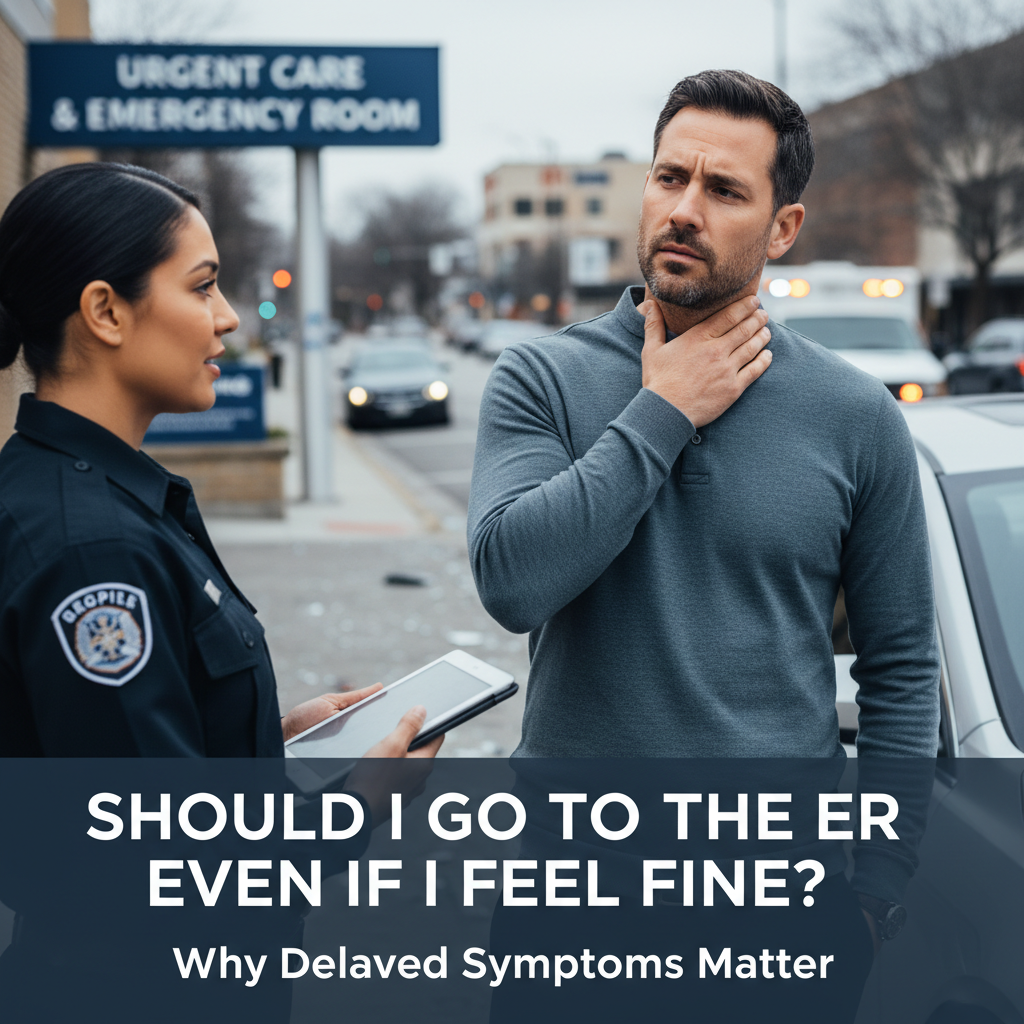
- Seek medical evaluation even if you feel fine—rear-end whiplash routinely doesn't manifest until 24-72 hours later.
- Have your vehicle inspected and brake lights documented as functional before any repairs.
- Contact an attorney to immediately send preservation letters for dashcam footage, traffic cameras, business cameras, and EDR data before evidence disappears.
- Do not give recorded statements to the other driver's insurer—even in clear-cut cases, recorded statements create ammunition for injury disputes.
"Clients come to me thinking rear-end cases are simple. And liability often is fairly clear. But I've never seen an insurance company just hand over fair money for rear-end injuries without a fight. They contest the injuries, attack the treatment, dig up old medical records. A clear-cut liability case is just the starting line—not the finish line."
The Bottom Line: Presumed Doesn't Mean Automatic
Being rear-ended at a red light puts the legal presumption of fault on the driver who hit you—and that's a powerful legal advantage. In the vast majority of these cases, liability ultimately falls on the rear driver.
But "presumed at fault" is not the same as "automatically pays fair compensation." Insurance companies will:
- Look for any hook to dispute liability or reduce fault percentage
- Contest every dollar of injury claims regardless of how clear the accident was
- Use recorded statements, social media, and medical history to minimize payouts
- Offer lowball settlements hoping you don't know your case's true value
The presumption of liability protects your legal position—but protecting your financial recovery requires the same steps every accident victim needs: proper documentation, immediate medical care, no recorded statements, and legal representation that knows how to translate a strong liability position into fair compensation.
A rear-end accident at a red light is one of the strongest cases you can have. Don't undermine it by making the mistakes that let insurance companies turn a slam-dunk into a prolonged fight. Get the guidance you need, protect the evidence, and make sure your case delivers the recovery you deserve.