Hit-and-Run Accident: What to Do When the Driver Flees
When the at-fault driver leaves the scene, your path to compensation changes. Understanding uninsured motorist coverage and immediate action steps determines whether you can recover for your injuries.
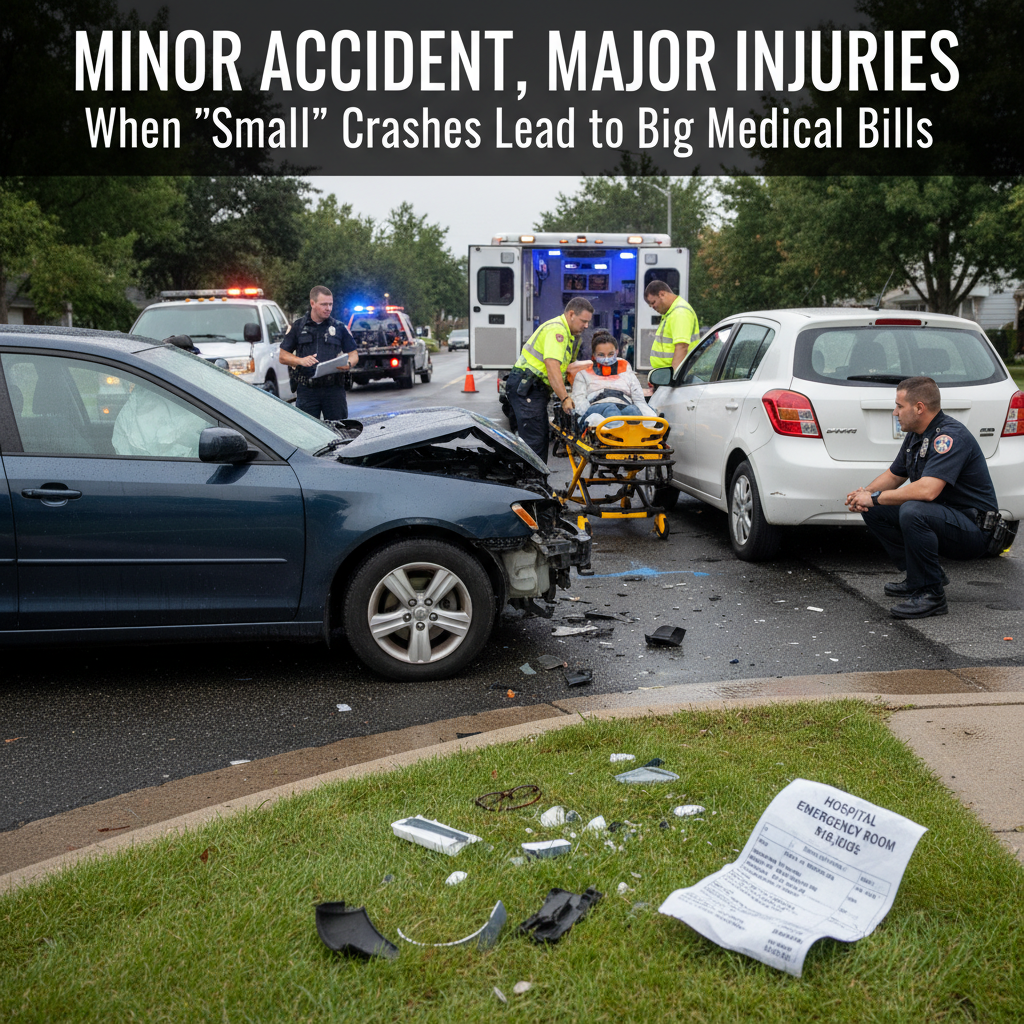
You're stopped at a red light. A vehicle slams into you from behind, pushing your car into the intersection. Before you can process what happened, you see the other vehicle speed away. No license plate. No chance to get information. You're injured, your car is damaged, and the responsible driver is gone.
Hit-and-run accidents create unique challenges. You can't file a claim against the at-fault driver's insurance if you don't know who they are. Police may never find them. Even if caught, many hit-and-run drivers are uninsured. But you still have options for recovery—if you know where to look and act quickly.
This article explains what to do immediately after a hit-and-run, how to maximize the chance police find the driver, what insurance covers you when the driver can't be identified, and how to protect your right to compensation.
Who Pays When the Driver Flees?
If the hit-and-run driver is never found, your own uninsured motorist (UM) coverage pays for your injuries and your collision coverage pays for vehicle damage. UM coverage treats unknown drivers the same as uninsured drivers. Most states require UM coverage, but limits vary. If you don't have UM coverage or your damages exceed your policy limits, you may have limited options for recovery. This is why UM coverage is critical—it's your safety net when the at-fault driver has no insurance or can't be identified.
Immediate Actions: The First 30 Minutes
1 Stop and Call 911
Never chase the fleeing vehicle. Pull over safely, turn on hazards, and immediately call 911. Report the hit-and-run, request police and ambulance if anyone is injured. Provide location, direction the vehicle fled, and any description you have.
2 Note Everything You Remember
Write down immediately while memory is fresh: vehicle make/model/color, license plate (even partial), number of occupants, direction of travel, distinguishing features (damage, stickers, unique characteristics), time of day and exact location. Every detail helps police locate the driver.
3 Look for Witnesses
Other drivers, pedestrians, nearby businesses may have seen the collision or the fleeing vehicle. Get names and contact information. Ask if anyone has dashcam footage. Witness testimony can identify the vehicle or corroborate your account.
4 Check for Surveillance Cameras
Identify businesses, traffic cameras, or residences near the collision that may have captured the accident or the fleeing vehicle. Inform police immediately. Request footage preservation within 24 hours—many systems delete after 30 days.
5 Look for Vehicle Parts or Paint
The fleeing vehicle may have left debris: paint chips, broken plastic, glass, or vehicle parts. These can help identify make/model. Photograph and preserve any debris. Show it to police.
6 Photograph the Scene
Take photos of: your vehicle damage (all angles), the intersection/location, skid marks or debris, any damage to other property, traffic signals or signs, your injuries if visible. Documentation supports your police report and insurance claim.
7 Report to Your Insurance Immediately
Call your insurance company within 24 hours. Report the hit-and-run. File a claim under your uninsured motorist coverage. Don't wait to see if police find the driver—start your claim process now.
How Uninsured Motorist Coverage Works
Your Safety Net for Hit-and-Run Accidents
Uninsured Motorist (UM) coverage is part of your own auto insurance policy. It pays for your injuries when you're hit by:
- A driver with no insurance
- A hit-and-run driver who can't be identified
- A driver whose insurance company denies coverage or is insolvent
Coverage limits: Whatever you selected when buying your policy (e.g., $50,000/$100,000 or $250,000/$500,000). This is the maximum you can recover for your injuries from your own insurance.
What it covers: Medical bills, lost wages, pain and suffering, permanent impairment—everything you'd recover from an at-fault driver's insurance if they had insurance.
Important: UM coverage pays for injuries only. Vehicle damage is covered under collision coverage (separate policy section). You'll need both to be fully compensated.
The Police Investigation
Police take hit-and-run accidents seriously—leaving the scene of an accident is a crime. What happens:
Immediate response: Officers search the area for the fleeing vehicle. They broadcast a description to other units. They interview you and witnesses. They document the scene.
Investigation: Detectives may follow up if there are leads. They review surveillance footage from nearby cameras. They check for similar vehicles registered in the area. They look for recent body shop work matching the damage pattern.
Success rate: Approximately 10% of hit-and-run cases result in identifying the driver. Better odds if: partial license plate obtained, distinctive vehicle, surveillance footage available, significant vehicle damage making the car identifiable, or witnesses who can identify the driver.
If caught: The driver faces criminal charges (hit-and-run is a misdemeanor or felony depending on severity). You can then file a claim against their insurance. Criminal restitution may be ordered, though hit-and-run drivers are often uninsured.
Filing Your UM Claim
Your uninsured motorist claim works like a regular injury claim, except you're claiming against your own insurance company:
Report the accident: Within 24-72 hours per your policy requirements. Delay can jeopardize coverage.
Provide a recorded statement: Your insurer will ask for your account of the accident. Be truthful and detailed about what happened, what you saw, and your injuries.
Cooperate with investigation: Your insurance company may investigate to verify the hit-and-run occurred. They may request police reports, witness statements, or surveillance footage.
Complete medical treatment: Same as any injury claim—get treatment, follow recommendations, reach maximum medical improvement before settling.
Submit your claim: Provide all medical records, bills, lost wage documentation, and evidence of damages. Request compensation up to your UM policy limits.
Negotiate settlement: Your own insurance company will evaluate your claim just like any other insurer. They may offer less than you're owed. Negotiation often required.
🚨 Your Insurance Company Is Not On Your Side
Even though it's your own insurance paying the claim, they're still incentivized to minimize what they pay. UM claims are evaluated the same way third-party claims are—they'll dispute injury severity, argue pre-existing conditions, challenge treatment necessity, and offer lowball settlements. Don't assume your insurer will be fair just because you've been paying premiums for years.
What If the Driver Is Found Later?
If police identify the hit-and-run driver after you've filed a UM claim:
Before you settle with your UM carrier: You can pursue the at-fault driver's insurance directly. Your UM claim can be put on hold while you negotiate with their insurer.
After you settle with your UM carrier: You've signed a release waiving further claims. Your insurance company now has subrogation rights—they can pursue the at-fault driver to recover what they paid you.
If the driver is uninsured: Your UM settlement stands. The driver may face criminal charges and potential civil judgment, but practically collecting from an uninsured hit-and-run driver is difficult.
What If You Don't Have UM Coverage?
If you don't have uninsured motorist coverage and the driver is never found, your options are limited:
- Your health insurance: Covers medical bills but not lost wages, pain/suffering, or other damages
- MedPay coverage: If you have medical payments coverage on your auto policy, it pays medical bills regardless of fault (typically $1,000-$10,000)
- Collision coverage: Pays for vehicle repairs (minus deductible)
- Crime victim compensation: Some states have funds for hit-and-run victims, but benefits are typically minimal ($5,000-$25,000 maximum)
Without UM coverage, you're unlikely to recover anything close to full compensation for serious injuries in a hit-and-run. This is why UM coverage is essential.
"Hit-and-run investigations are frustrating for everyone involved. We want to find the driver, but without a plate number or clear vehicle identification, the odds are low. That's why I always tell people: the first 60 seconds after the impact are critical. If you can get even a partial plate, a clear description, or identify a nearby camera, it dramatically improves our chance of finding the driver. And regardless of whether we find them, call your insurance immediately—your UM coverage is your lifeline."
Settlement Values for Hit-and-Run Cases
Hit-and-run settlements are capped by your UM coverage limits:
Minor injuries, low UM limits ($25K/$50K):
- Soft tissue injuries, 6-8 weeks recovery
- Medical bills: $8,000
- Settlement: $20,000-$25,000 (policy limit)
Moderate injuries, adequate UM limits ($100K/$300K):
- Fracture or herniated disc, 4-6 months recovery
- Medical bills: $35,000
- Settlement: $80,000-$120,000
Serious injuries, high UM limits ($250K/$500K):
- Multiple injuries, surgery, permanent impairment
- Medical bills: $150,000+
- Settlement: $300,000-$500,000 (policy limit)
The lesson: UM coverage limits matter enormously. If you have $25,000 UM coverage and $200,000 in damages, you're capped at $25,000 recovery regardless of injury severity.
The Bottom Line
Hit-and-run accidents are among the most frustrating collision types because the at-fault driver escapes accountability. But you're not without options. Your uninsured motorist coverage provides the same compensation you'd get from the at-fault driver's insurance—up to your policy limits.
The keys to maximizing your recovery: act immediately to preserve evidence and help police find the driver, report to your insurance within 24 hours, document everything thoroughly, complete all medical treatment before settling, and understand your UM policy limits. If your injuries are serious and approach or exceed your UM limits, professional representation becomes essential for negotiating with your own insurance company.
And after this experience: increase your UM coverage limits. The difference between $25,000 and $250,000 in UM coverage costs only a few dollars per month—but can mean the difference between full recovery and financial devastation if you're ever hit by an uninsured or unidentified driver again.